You know the feeling. You finish saying something. And then you wait.
You watch the screen. Maybe you say it again, louder, wondering if it heard you. Then the response comes. Three, four seconds later. And the moment is already gone.
That's not a conversation. That's a test of patience. And it's quietly killing your ability to actually learn a language.
If you're waiting, you're not learning. You're just waiting.
The Walkie-Talkie Problem
Most language apps were built like walkie-talkies. You speak. You wait. It responds. You wait again. Over and out.
Real conversation doesn't work like that. When you talk to someone, there's almost no gap. Half a second, maybe less. Your brain expects that rhythm. It's wired for it.
When that rhythm is broken, your brain stops treating it like a conversation. It treats it like a quiz. And quizzes train very different skills than conversations.
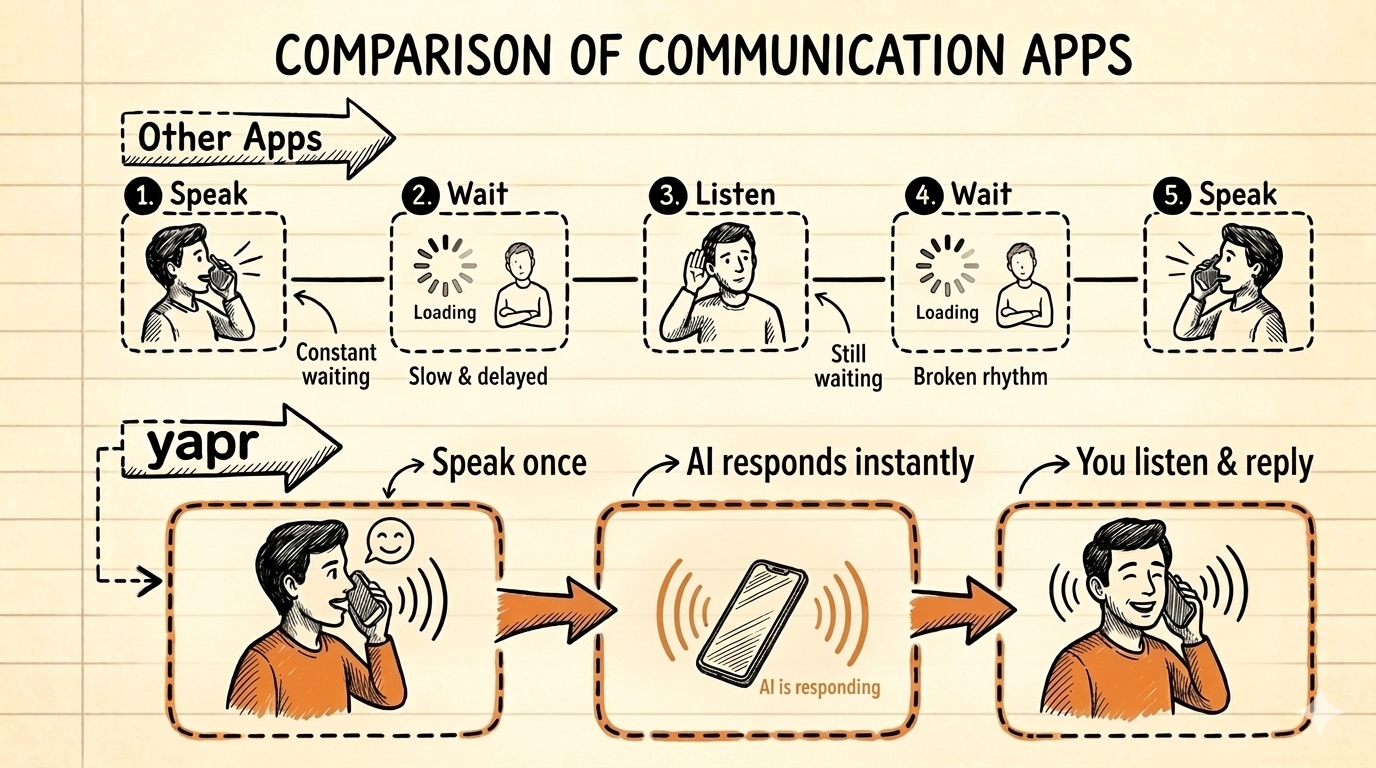
Why Your Brain Hates the Wait
Language fluency isn't about memorizing phrases. It's about building neural pathways. Automatic connections that let you respond without translating in your head first.
Those pathways get built through flow. Back-and-forth. Rhythm.
Think about how you learned your first language as a kid. You didn't pause for three seconds after someone spoke to you. You responded instantly, sometimes mid-sentence. That back-and-forth is what trains your brain to actually think in a new language.
Without it, you're just collecting vocabulary. You're not learning to speak.
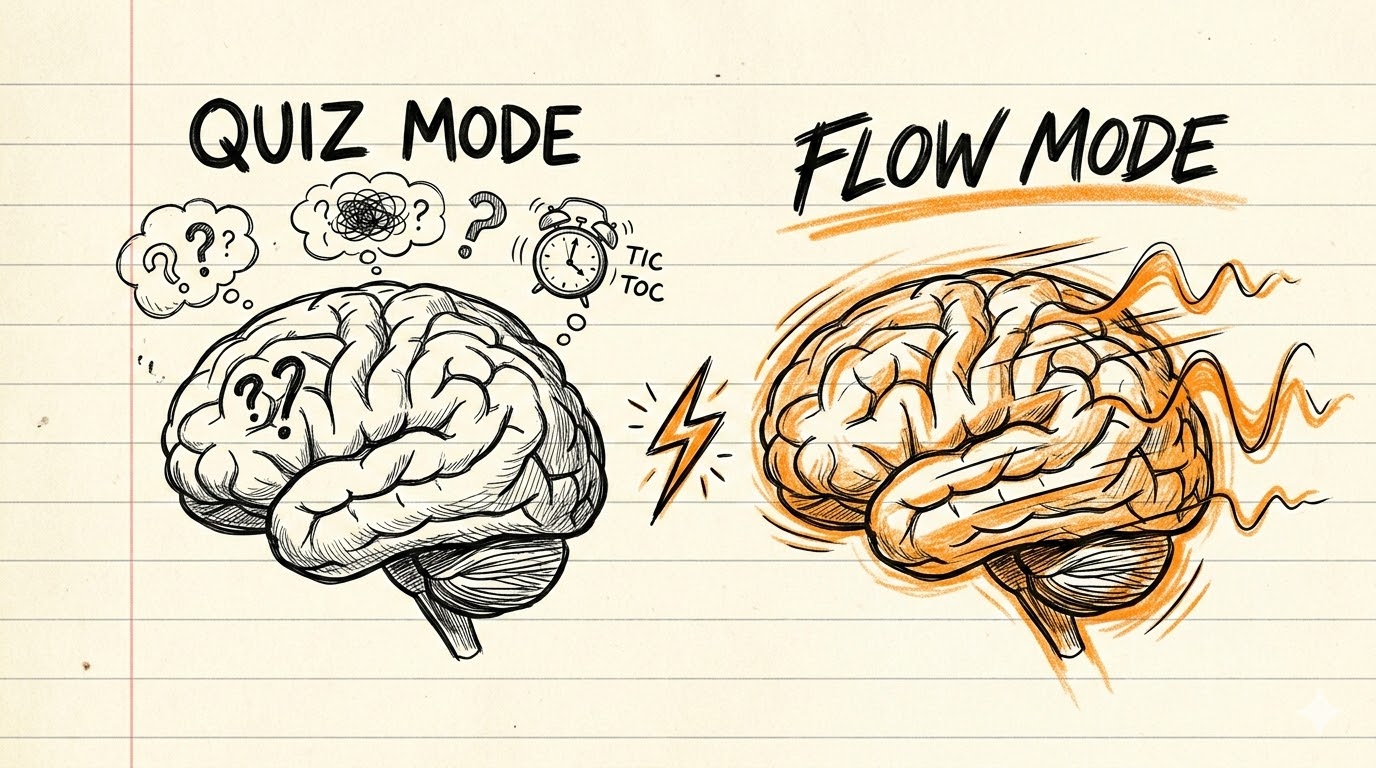
Slow responses put your brain in quiz mode. Flow requires speed.
The Confidence Killer Nobody Talks About
There's another problem with the wait. It gives doubt a place to live.
When you're already nervous about speaking a new language, a three-second silence feels like an eternity. Did it understand me? Should I try again? Maybe I said it wrong.
That pause isn't neutral. It actively trains you to second-guess yourself, which is exactly the opposite of what building real speaking confidence requires.
You need a practice environment where the conversation moves. Where you don't have time to spiral. Where the response comes fast enough that you have to stay present and keep going.
You can't build speaking confidence in an environment designed for waiting.
What Happens When the Wait Goes Away
When a response comes back in under half a second, faster than a breath, something shifts.
You stop mentally preparing your next sentence while waiting. You stop double-checking whether it understood you. You just talk.
That's the moment real practice starts. And it's what we built Yapr around.
In the next post, we break down exactly how sub-500ms response time works, and what it actually feels like to practice at the speed of real conversation.